FIBROVX
Industrial and Infrastructure Applications
Start with the application to find relevant products across the catalog. Product suitability and supply details depend on the actual specification and project conditions.
Build a product list around the application
Follow the process, access and service routes together. Each component still needs its own material, operating conditions and installation requirements.
Established industry combinations → Emerging applications →
Water & wastewater
Coordinate storage and transfer, covered treatment areas and safe access. Add odor treatment where the process requires it.
Chemical & process facilities
Match storage and piping to the chemical duty, then coordinate exhaust treatment and maintenance access.
Power & utilities
Plan cable routes with their supports, equipment cooling and inspection access. Electrical and fire requirements remain specific to the selected system.
Find the relevant product family
A project may involve several product families. These examples help you identify a starting point without treating a material name as a complete specification.
Walkways, platforms and stairs
Explore grating, profiles, ladders, handrails and stair products. Share the layout, support spacing, loading requirement and fixing arrangement. Distinguish surface covers and nosings from replacement load-bearing treads.
Grating, Profiles & Access SystemsWater, wastewater and storage
Explore pipes, flanges, tanks and covers. Include the medium, temperature, dimensions or capacity, connections and installation arrangement. Add any specific access or loading requirement for covers.
Tanks, Pipes & CoversProcess air and odor control
Explore scrubbers, demisters, fans and odor-control equipment. Provide the gas or odor source, flow and operating conditions, together with the required duty and available installation space.
Air Pollution & Odor ControlCooling systems and replacement components
Explore cooling towers and fill media. Share the operating duty for equipment inquiries, or the dimensions, material and existing tower details for replacement components.
Cooling Towers & ComponentsPower, utilities and cable routes
Explore cable trays and supports. Provide the route, dimensions, support layout and fixing details, with any project requirements for loading, fire behavior or electrical properties.
Cable Trays & SupportsBuildings and site operations
Explore barriers, marker posts, bins and transparent roofing sheets. Include the intended use, dimensions, quantity, required markings and installation or fixing requirements.
Building & Site ProductsWorking from a mixed product list?
Send one inquiry with the components you need, the application and the destination. A drawing, bill of materials or existing equipment reference can help explain the scope.
Request a QuoteLarge-scale and system solutions
VOC and industrial exhaust (RTO / RCO)
Coating, printing, chemical and pharmaceutical plants emitting solvent vapors need end-of-pipe VOC abatement. Higher concentrations (catalog design range 1,000–4,500 mg/m³) suit regenerative thermal oxidation; lower concentrations (500–700 mg/m³) suit catalytic oxidation at 250–300 °C; high-flow, dilute exhaust is first concentrated 5–20× on a zeolite rotor. FRP ductwork and stacks handle the corrosive gas on either side.
Products: RTO oxidizers, RCO oxidizers, zeolite rotor concentrators, UV, plasma and carbon units. See the full VOC & dust emission control range.
Prefabricated pumping stations
Municipal drainage, stormwater and small communities can replace a cast-in-place concrete wet well with a prefabricated pumping station: a wound FRP barrel delivered with submersible pumps, auto-coupling, valves and controls, sized to the duty.
Products: FRP prefabricated pumping stations, FRP / FRPM pipes, pipe fittings.
Field-wound large storage tanks
Where a tank is too big to ship, it is filament-wound on site: DN4000–25000 and up to 5,000 m³ for acid, alkali, brine and wastewater storage, built on your foundation plan.
Products: field-wound FRP tanks, HCl and chemical tanks, FRP mixing tanks. See all FRP storage tanks & vessels.
Chimneys and exhaust stacks
Wet, acidic flue gas downstream of scrubbers, desulfurization and VOC systems corrodes steel. FRP stacks are designed for −40 to 220 °C depending on the resin, with a design service life of 25+ years.
Products: FRP chimneys and stacks, FRP process towers, desulfurization towers, FRP ductwork.
Looking at newer sectors such as batteries, hydrogen or data centers? See emerging industries.
Industries we serve
FIBROVX supplies fiberglass reinforced plastic (FRP) products to buyers in industries where steel corrodes, where conductive metal is a hazard, or where heavy parts are hard to install. This page lists the established industries we serve, the problem FRP solves in each, the products that fit, and our technical guides. Every product is quoted to your drawing; there are no list prices.


Looking for newer sectors such as data centers, battery storage, EV charging, hydrogen and offshore wind? See Emerging Industries.
On this page: Wastewater · Chemical processing · Power and utilities · Oil and gas · Marine and offshore · Mining · Food and beverage · Cooling towers and HVAC · Telecom · Agriculture and livestock · Building and construction · Transportation
Wastewater treatment
Sewers, headworks and covered basins release hydrogen sulfide. Bacteria on damp surfaces convert it to sulfuric acid, which attacks concrete and metal[1]. Workers also enter tanks, wet wells and chambers that are often permit-required confined spaces[2], so durable, light covers and walkways reduce maintenance entries and make access safer.
Products: FRP wastewater tank covers, bio-deodorization units, molded grating, handrail systems, FRP pipes, septic tanks, manhole covers; collections Tanks, Pipes and Covers and Air Pollution and Odor Control.
Guides: FRP in wastewater treatment plants, odor control covers, biofilter vs chemical scrubber, FRP septic tanks.
Chemical processing
Acids, alkalis and solvent fumes corrode carbon steel tanks, ducts and walkways. Wet scrubbers remove acid gases from exhaust by contacting the gas with a scrubbing liquid[3], and both the scrubber and the storage tanks must resist the same chemicals. FRP tanks are commonly built to standards such as ASTM D3299 (filament-wound) and ASTM D4097 (contact-molded)[4][5]; the design standard and resin are agreed for each order.
Products: FRP hydrochloric acid tanks, acid fume scrubbers, FRP fans, mist eliminators, pipes, flanges, grating.
Guides: chemical resistance guide, choosing a resin, FRP tanks for hydrochloric acid, FRP tank standards, FRP scrubbers, packed bed scrubber sizing, FRP fans for corrosive exhaust.
Power and utilities
Utilities need materials that do not conduct electricity. OSHA requires portable ladders to have nonconductive siderails where the worker or ladder could contact exposed energized parts[7], and the NEC permits nonmetallic cable tray in corrosive areas and in areas that need voltage isolation[6]. Flue gas desulfurization (FGD) systems at boiler plants also handle wet, acidic gas.
Products: FRP cable trays, cable supports, FRP ladders, telescopic barriers, filament-wound cable conduit, desulfurization towers, tube bundle demisters; collection Cable Trays and Supports.
Guides: FRP cable tray guide, cable tray standards, FRP ladders, telescopic barriers for electrical safety zones, what is a mist eliminator.
Oil and gas
Refineries, terminals and coastal facilities expose steel to salt air, process chemicals and constant moisture. ISO 12944-2 rates coastal and offshore atmospheres among its most corrosive categories[9]. Buried pipelines also need visible route marking: U.S. rules require line markers over gas mains and transmission lines at crossings and where needed to reduce damage[8].
Products: molded grating, handrail, load-bearing stair treads, pultruded profiles, cable trays, marker posts; collection Grating, Profiles and Access Systems.
Guides: designing an FRP platform, FRP grating guide, fire performance of FRP grating, marker posts for pipelines and cables, FRP vs HDPE vs steel pipe.
Marine and offshore
Seawater spray and wet decks corrode steel quickly; ISO 12944-2 places offshore atmospheres in its extreme category, CX[9][19]. On U.S.-inspected vessels and offshore units, the Coast Guard accepts FRP gratings that conform to ASTM F3059 as equivalent to steel under Policy Letter 01-18[10][11]. FIBROVX does not claim that approval; confirm the requirements with your flag state or class society before you order.
Products: molded grating, handrail, ladders, pultruded profiles, cable trays.
Guides: molded vs pultruded grating, grating surface options, FRP vs aluminum grating, FRP handrail systems.
Mining and mineral processing
Processing plants are wet, dusty and often acidic. Electrolytic cell rooms, such as those used in electrowinning, are the standard example of where nonmetallic cable tray is preferred, because a metal tray could create a high-current stray path[20]. Walkways over tanks and launders also benefit from cut-to-fit, non-rusting grating.
Products: molded grating, handrail, cable trays, acid fume scrubbers, chemical tanks, pipes.
Guides: grating mesh sizes, span and load tables, choosing a cable tray type.
Food and beverage
Food and beverage plants are humid, and ISO 12944-2 lists food processing and breweries as typical humid interiors[19]. Frequent washdown, cleaning chemicals and process wastewater add to the corrosion risk for steel. Odor from processing and effluent treatment often needs control as well.
Products: molded grating, handrail, FRP fans, bio-deodorization units, SMC panel water tanks.
Guides: grating colors, grating surface options, biofilter vs chemical scrubber. Food-contact approvals are not claimed; tell us if your project needs one.
Cooling towers and HVAC
Cooling towers run warm, wet and chemically treated. Water treatment and maintenance are required to control scale, corrosion and Legionella growth[12][13]. FRP casings and structures do not rust in this environment.
Products: FRP cooling towers, cooling tower fill media (PVC or PP, not FRP), FRP fans, pultruded profiles; collection Cooling Towers and Components.
Guides: FRP cooling towers guide, film vs splash fill.
Telecom
Underground telecom enclosures and covers are rated to ANSI/SCTE 77 load tiers in North America[14], and EN 124 classes apply in Europe. EN 124-5 applies to composite covers[15]. FIBROVX covers made by the automatic single-piece molding process can be made to EN 124-5; hand lay-up covers are outside EN 124-5. Conformity is confirmed per order and load class.
Products: FRP manhole covers, cable supports, filament-wound cable conduit, marker posts, ladders.
Guides: FRP for telecom infrastructure, FRP manhole covers vs cast iron, marker posts.
Agriculture and livestock
In livestock housing, ammonia combines with moisture to form ammonium hydroxide, which attacks most metal surfaces; dust and condensation speed up the damage[16]. Roof structures, fans and fittings near air openings are the first to suffer.
Products: translucent roofing sheets, FRP purlins, FRP fans, molded grating, water tanks, bio-deodorization units.
Guides: translucent roofing sheets, FRP purlins for corrosive roofs, FRP fans.
Building and construction
Stairs wear, edges become slippery, and roofs in coastal or industrial areas corrode. Where FRP is used as an interior finish, building codes classify it by ASTM E84 flame spread[17][18]; fire-retardant resins can be quoted on request and test data is confirmed per item.
Products: stair tread covers, stair nosings, load-bearing stair treads, translucent roofing sheets, purlins, handrail, FRP waste bins; collection Building and Site Products.
Guides: stair treads vs nosings vs tread covers, FRP profiles vs steel and aluminum, FRP structural design basics.
Transportation
Roads, rail corridors, tunnels and ports need durable route markers, temporary barriers, cable routes and access covers. Composite covers have little scrap value, which helps deter the theft that affects cast iron, and composite covers can be specified under EN 124-5[15].
Products: marker posts, telescopic barriers, manhole covers, cable trays, grating for trench covers.
Guides: FRP manhole covers vs cast iron, marker posts, EV charging stations.
Every product is made to order and can be customized in size, resin, color and fittings. Dimensions, test data and drawings are confirmed in writing with each quotation. FIBROVX does not claim third-party certifications or approvals on this page; where a project requires one, tell us in your inquiry and we will confirm in writing what can be supplied.
New to the material? Start with What is FRP?, How FRP is made and custom FRP manufacturing.
Tell us your industry, the medium or environment, dimensions and quantity. We reply by email with a written quotation.
Request a QuoteSources
- U.S. EPA (1991), Hydrogen Sulfide Corrosion in Wastewater Collection and Treatment Systems, Report to Congress: https://sargcoop.org/wp-content/uploads/2011/06/EPA-1991-Hydrogen-Sulfide-Corrosion-Its-Consequences-Detection-and-Control.pdf
- 29 CFR 1910.146, Permit-required confined spaces (Cornell LII): https://www.law.cornell.edu/cfr/text/29/1910.146
- U.S. EPA, Monitoring Control Technique: Wet Scrubber for Gaseous Control: https://www.epa.gov/air-emissions-monitoring-knowledge-base/monitoring-control-technique-wet-scrubber-gaseous-control
- ASTM D3299-18, Filament-Wound Glass-Fiber-Reinforced Thermoset Resin Corrosion-Resistant Tanks: https://www.astm.org/d3299-18.html
- ASTM D4097-19, Contact-Molded Glass-Fiber-Reinforced Thermoset Resin Corrosion-Resistant Tanks: https://www.astm.org/d4097-19.html
- EC&M, Stumped by the Code? (NEC 392.10(D), nonmetallic cable tray): https://www.ecmweb.com/national-electrical-code/qa/article/21131926/stumped-by-the-code
- 29 CFR 1910.333, Selection and use of work practices (Cornell LII): https://www.law.cornell.edu/cfr/text/29/1910.333
- 49 CFR 192.707, Line markers for mains and transmission lines (Cornell LII): https://www.law.cornell.edu/cfr/text/49/192.707
- ISO 12944-2:2017, Classification of environments: https://www.iso.org/standard/64834.html
- SAFETY4SEA, USCG publishes guidance on FRP gratings (Policy Letter 01-18): https://safety4sea.com/uscg-publishes-guidance-on-fiber-reinforced-plastic-gratings/
- ASTM F3059, Fiber-Reinforced Polymer (FRP) Gratings Used in Marine Construction and Shipbuilding: https://www.astm.org/standards/f3059.htm
- CDC, Controlling Legionella in Cooling Towers: https://www.cdc.gov/control-legionella/php/toolkit/cooling-towers-module.html
- U.S. DOE FEMP, Best Management Practice #10: Cooling Tower Management: https://www.energy.gov/femp/best-management-practice-10-cooling-tower-management
- ANSI/SCTE 77 2017, Specification for Underground Enclosure Integrity (preview): https://webstore.ansi.org/preview-pages/SCTE/preview_ANSI+SCTE+77+2017.pdf
- EN 124-5:2015, Gully tops and manhole tops, Part 5: Composite materials: https://standards.iteh.ai/catalog/standards/cen/63143102-a6e9-459f-aca8-05bd336df9d8/en-124-5-2015
- Ontario OMAFA, Corrosion of roof truss connector plates in farm buildings: https://www.ontario.ca/page/corrosion-roof-truss-connector-plates-farm-buildings
- 2021 International Building Code, Chapter 8: Interior Finishes: https://codes.iccsafe.org/content/IBC2021P2/chapter-8-interior-finishes
- ASTM E84-23, Surface Burning Characteristics of Building Materials: https://www.astm.org/e0084-23.html
- Transocean Coatings, ISO 12944 corrosivity categories (summary table): https://transocean-coatings.com/about-us/protective-coatings/iso-12944/
- Eaton, Cable Tray Manual (NEC 392.10(D), nonmetallic cable tray): https://www.eaton.com/content/dam/eaton/products/support-systems/cable-management/ct-manual.pdf
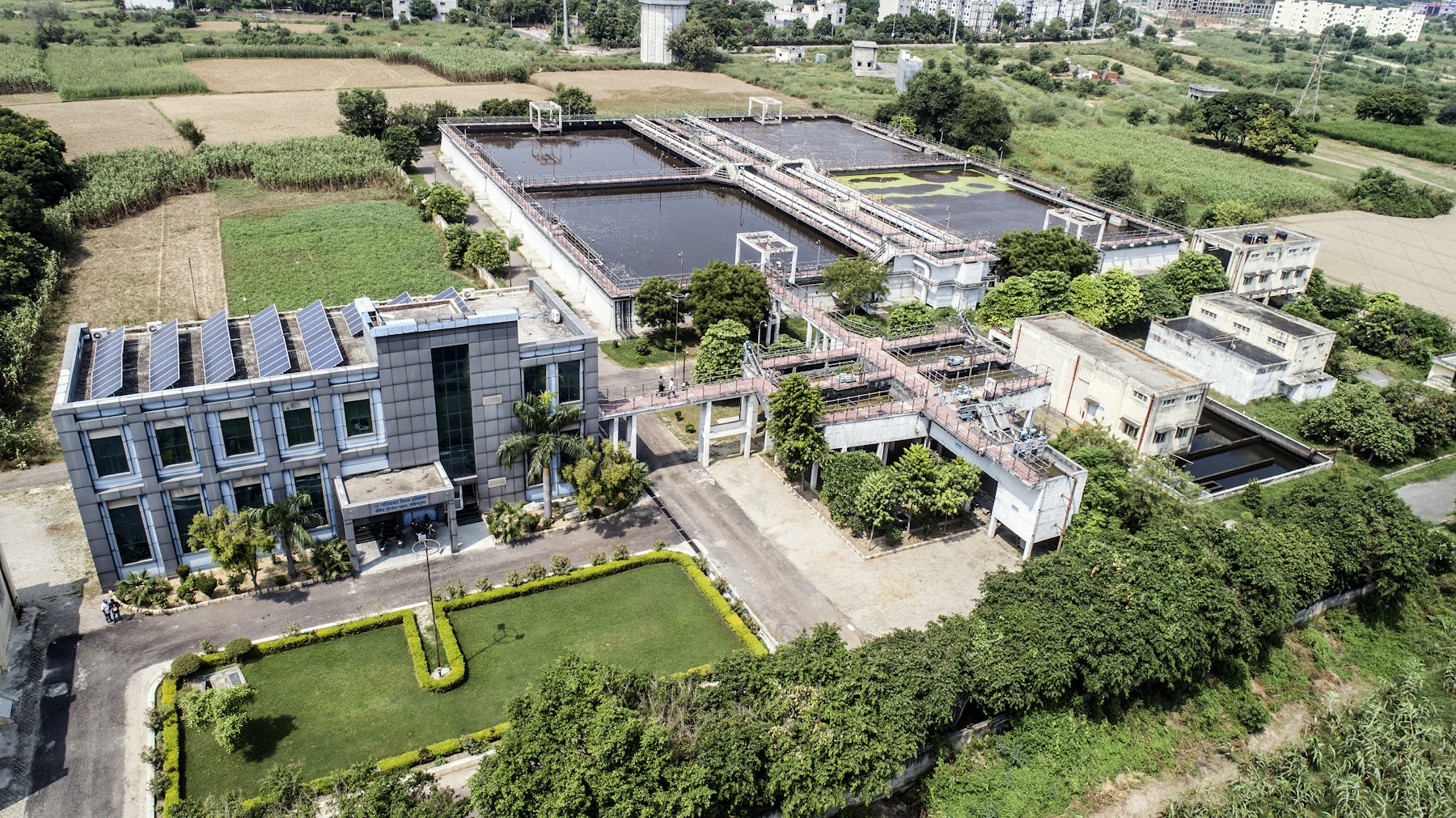

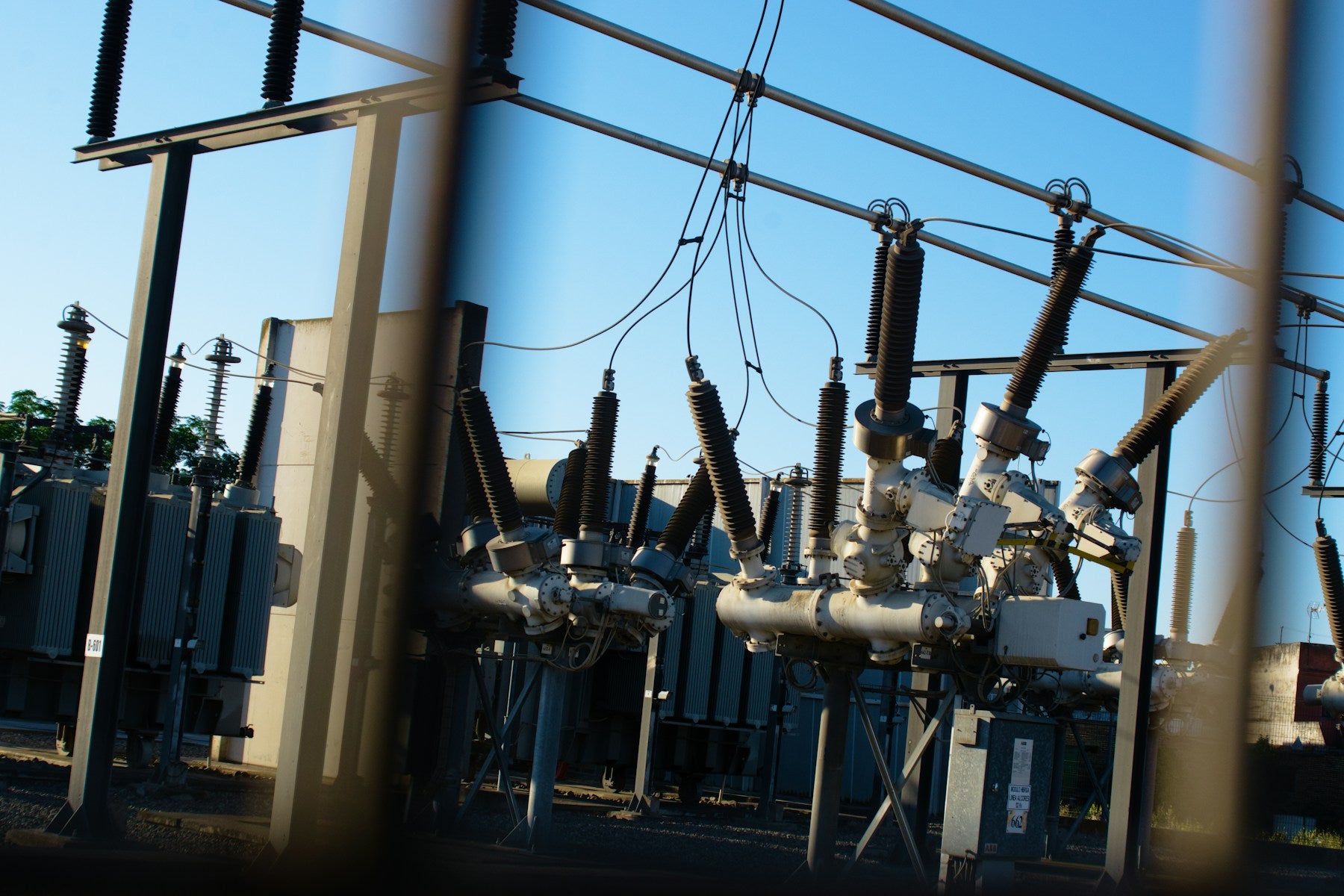
Image credits
These photographs illustrate industrial application settings. They do not represent FIBROVX-owned facilities or completed projects.
- Water and wastewater illustration — Subhash Chand / Unsplash
- Chemical and process illustration — Ali Mucci / Unsplash
- Power and utilities illustration — Jose Manuel Esp / Unsplash